




Wallet
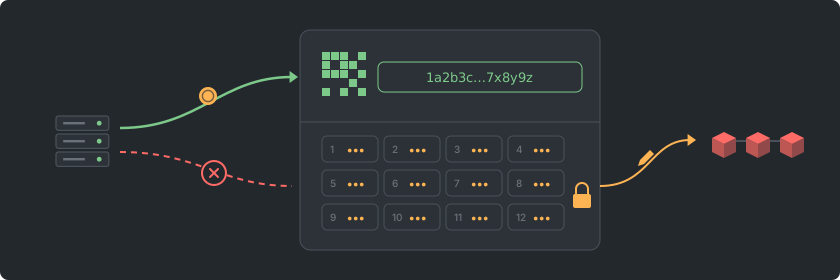
A wallet holds the keys that control your coins. The coins themselves live on the blockchain. The wallet proves you own them and signs the transactions that spend them.
Every wallet has two halves. The public address is what you share to receive coins, like an account number. The private key, often stored as a seed phrase, is what spends them. Many wallets use a seed phrase of 12 or 24 words, and anyone who has those words can take your coins.
Wallets come in a few kinds. A software wallet on a computer or phone is called hot, because it is online and easy to use. A hardware wallet is a small device that keeps the keys offline and signs transactions inside itself. That is called cold storage, and it suits larger balances.
For mining you only ever give the pool your public address. A pool never needs your seed phrase or private key. If any site, support chat or program asks for them, treat it as theft.
Each coin has its own address format. A wallet for one coin cannot receive another unless it says it supports both. Mining to an address of the wrong coin is a common and costly mistake, so copy the address from a wallet built for the coin you mine.
You can also mine to an exchange deposit address. Then the exchange holds the keys, not you. It can change or retire that address, so check that it still accepts deposits of that coin before you point a rig at it.
In practice, download wallets only from the coin's official sources. Write your seed phrase on paper and keep it offline. Test the setup with a small amount before you rely on it, and check your address in the miner against the one in your wallet, character by character.