



How to find your worker IP address
Payout settings changes are checked against your worker IP. Learn which public IP the pool means and how to find it on any system or farm.
Why does the pool ask for an IP?
The IP protects your payout settings, such as your minimum payout. The pool has no account and no password, so it needs another way to know a change is yours.
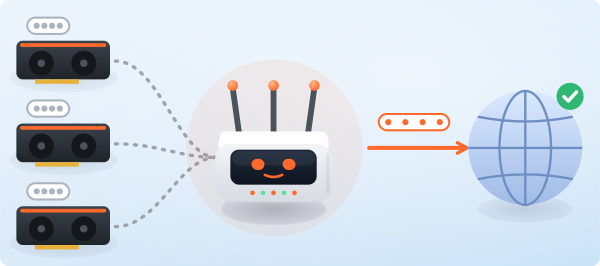
A change is only accepted from a network your own rigs mine from. While you are mining, that is the network you have mined from the longest.
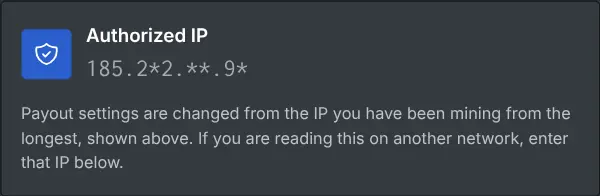
The payout settings tab shows that IP, masked. So you know which one to enter.
Which IP does the pool mean?
The pool means the public IP of your rig's internet connection. A public IP is the address the whole internet sees for your network.
It is not the local 192.168.x.x address of the machine itself. So "what is my worker IP" really means "what is the public IP of my rig's network".
How do I find it on any system?
Use any device on the SAME network as the rig. Search "what is my IP" in a browser, or run this in a terminal:
curl ifconfig.meThe command works in Windows PowerShell, on Linux and in the HiveOS shell. The answer is the public IP the pool sees for every rig on that network.
What about farms and several rigs?
- All rigs behind the same router share one public IP. One lookup covers the whole farm.
- Rigs in different locations each have that location's own public IP. Use the location you have mined from the longest, which the payout tab shows masked.
- Home connections can get a new IP when the router reconnects. The previous IP keeps working for a while.
- A new IP works once the rig has sent a good number of shares from it.