




How to fix rejected shares
What a rejected share means, how it differs from a stale share, and a step-by-step checklist that fixes the most common causes.
Rejected or stale: what is the difference?
A rejected share is work that failed the pool's checks. It earns nothing. Any amount of rejects means something in your setup is wrong.
A stale share is different. It was valid work that arrived too late, because the network moved to a new block while your share was in flight. A small stale percentage is normal on any pool.
A share is rejected for one of these reasons:
- It used the wrong algorithm.
- The work was malformed.
- It was below the assigned difficulty.
- It was a duplicate of a share already sent.
What causes rejected shares? Check these in order
Work through this list from the top. The most likely causes come first.
- Algorithm: start the miner with the coin's exact algorithm. A wrong algorithm produces hashes the pool cannot accept, often with 100% rejects.
- Miner version: update to the latest miner release. After a network upgrade, an old miner keeps working to the old rules, and every share fails.
- Overclock: set your GPU back to stock clocks and test. An unstable core or memory clock makes work that only sometimes fails verification. That is the classic "5% rejected" sign.
- Duplicate rigs: two rigs set up with the same worker name and connection can submit the same work twice. Give every rig its own worker name.
- Connection: high packet loss or a flaky proxy can corrupt or resend submissions. Test the closest region and a wired connection.
How do I see why a share was rejected?
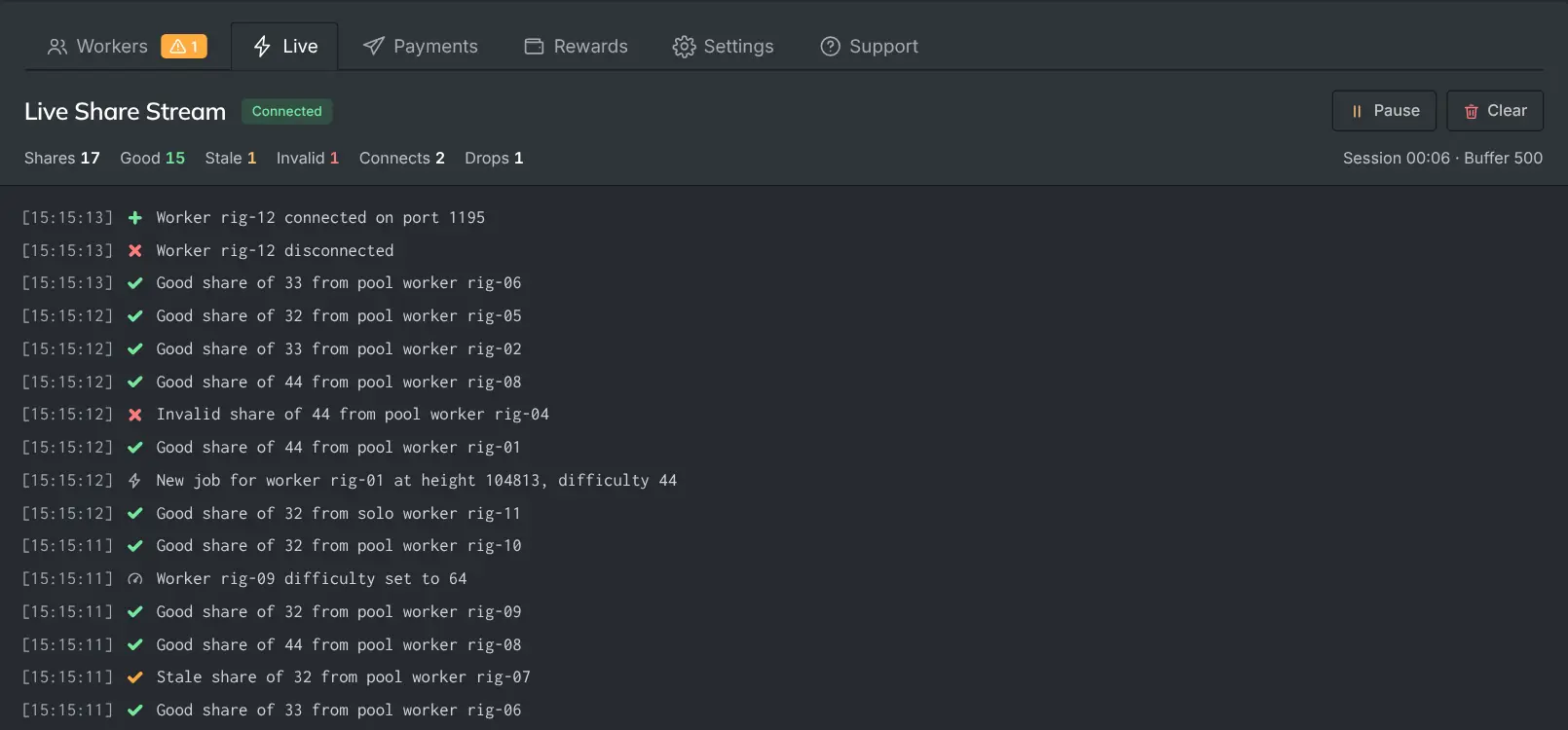
Read the reject reason first. The pool's reply to a rejected share says why, and your miner prints it in its console and log.
The usual reasons are low difficulty, job not found, duplicate and malformed. That one line usually names the fix, so do not troubleshoot blind.
The help article "Share reject reasons: what the pool told your miner" explains each reply. It also says which replies point to a problem at your end, and which mean nothing is wrong.
What if only one rig rejects shares?
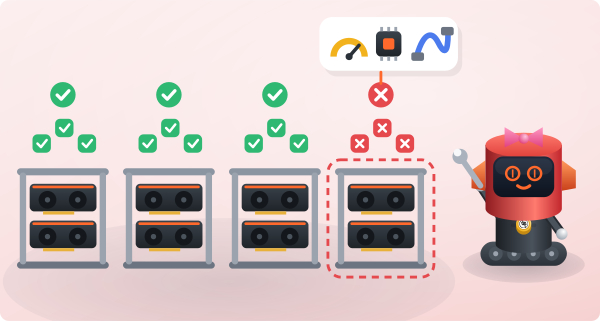
If your other rigs are clean, the problem is that machine, not the pool. Suspect these parts of it, in this order:
- Its overclock profile.
- Its driver version.
- Its riser cables.
What if every rig rejects at once?
Check the miner version and the algorithm first. Then check the pool's status page and announcements.