








Solo mining on the pool: a complete guide
How to mine Qubitcoin solo with one address prefix, keep whole blocks minus the solo fee, read your odds, and decide if solo suits your rig.
What is solo mining on this pool?
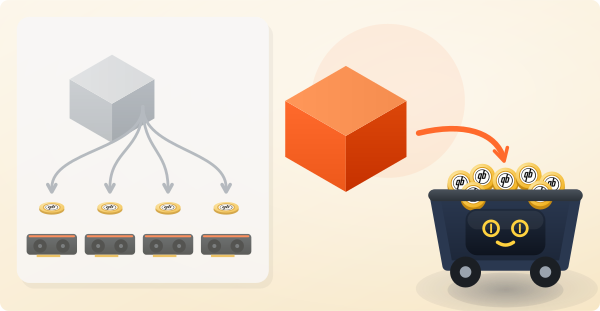
Solo mining here means you use the pool's servers and stratum, but you mine for whole blocks on your own. You do not share every block with the round.
When one of your rigs finds a block, you keep the entire reward minus the solo fee. The pool sets the solo fee apart from the pool fee. Nobody else shares in your block, and you share in nobody else's.
How to turn it on
Put "solo:" in front of your wallet address in your miner's configuration. For example, write solo:YOUR_QTC_ADDRESS. That single change is the whole switch.
- The server stays the same.
- The port stays the same.
- The miner stays the same.
You can go back to pool mining at any time. Remove the prefix and restart the miner.
What are the odds of finding a block?
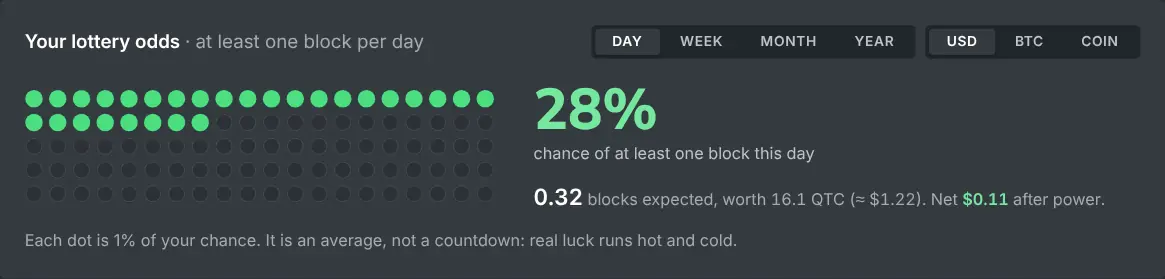
Solo mining is all about variance, meaning how much your results swing from week to week. A big rig might find several blocks in a lucky week, then none for a long stretch.
The long-run average is the same as pool mining. The difference is that the payout arrives in rare, large lumps instead of many small ones.
Before you decide, open the solo mining calculator and enter your hashrate. Read the median time to a block and the odds over a period.
Who should mine solo?
Solo fits large rigs and patient miners. They can ride out the dry spells and prefer keeping whole blocks.
Pool mining is the better fit in two cases.
- A steady, predictable income matters more to you.
- The median time to a block is longer than you are comfortable waiting.
Both modes run side by side on the same pool.