








Pool luck and orphan blocks explained
What block effort and pool luck really mean, why an unlucky streak is normal variance, what an orphaned block costs, and why daily counts use UTC.
What does pool luck mean?
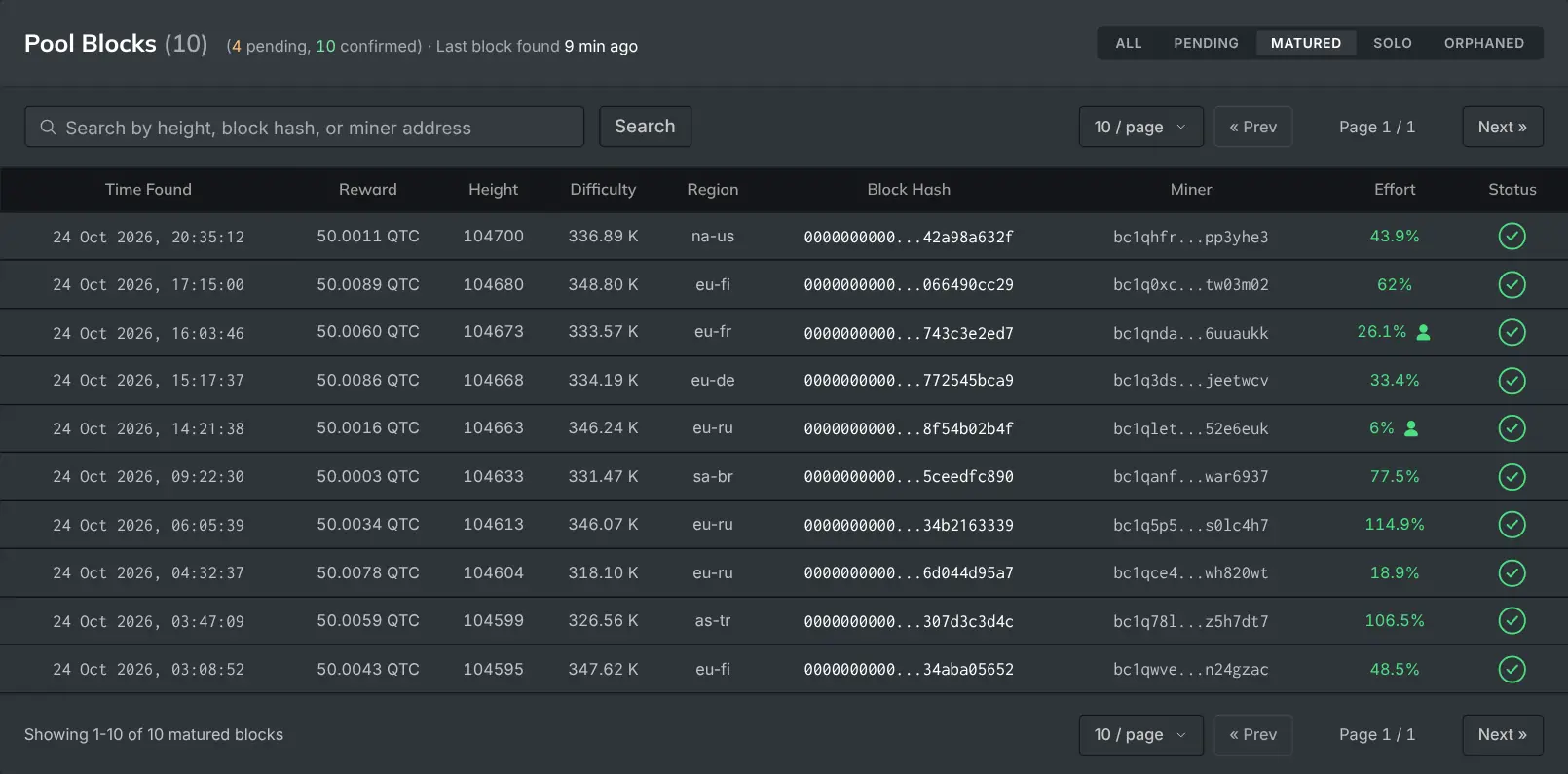
Luck is just variance. Finding a block is a random event, like rolling for a rare result over and over.
Sometimes the pool finds a block far sooner than the difficulty says it should. That is good luck. Sometimes it finds one later, and that is bad luck.
Effort is the number that measures this. Under 100% means the block came early, and over 100% means it came late. Single blocks swing widely, but across many blocks effort averages toward 100%.
What is an orphan block?
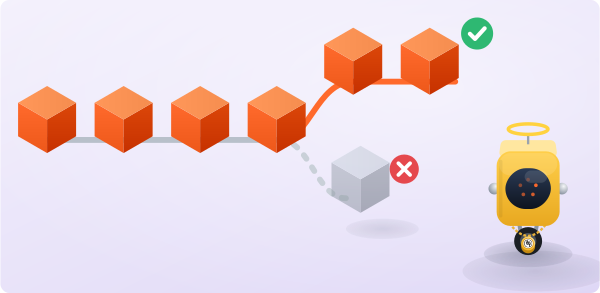
Now and then two miners anywhere on the network find a valid block at nearly the same moment. The network can keep only one of them on the main chain. The other becomes an orphan, sometimes called a stale block.
An orphaned block pays nothing, because it never became part of the accepted chain.
Are orphan blocks the pool's fault?
No. Orphans happen on every blockchain and to every pool. They come from how the network settles a tie between two blocks, not from a fault in the pool or your rig.
On this pool, orphaned blocks are marked as orphans. They are left out of your confirmed block count automatically. So your dashboard only ever counts the blocks that actually paid.
Does luck change what you earn over time?
No. Luck and the occasional orphan add short-term noise, but they do not change the long-run maths. Over enough blocks, effort trends to 100% and the orphan rate stays small and steady.
This is exactly why pool mining exists. It smooths that variance into regular payouts, instead of leaving you exposed to it alone.
Why do daily block counts use UTC?
The Daily Blocks chart and its effort history table count blocks by calendar day in UTC, the world's reference time. So every miner sees the same days, wherever they are. The block list below them shows each block's time in your own time zone.
A block found just after midnight on your clock can still belong to the previous day in UTC. For example, at UTC+3 a block listed at 01:50 on 30 October counts on 29 October in the chart.
No block is lost or counted twice. To match the two, subtract your UTC offset from the time in the list.