




Stratum
Stratum is the protocol a miner uses to connect to a pool. The pool hands out work and the miner submits shares back over it. It is the standard language of pool mining.
Stratum keeps one connection open between the miner and the pool, and both sides send short JSON messages over it. It replaced an older method in which miners had to keep asking the pool for new work. With stratum the pool pushes new work the moment it is ready, which cuts wasted effort.
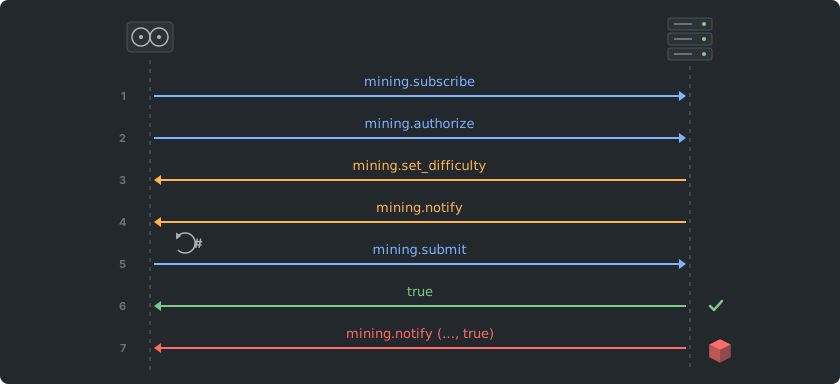
A session follows a few steps. The miner first subscribes, then logs in with its username, which on most pools is a wallet address. The pool sends a job and a share difficulty. The miner hashes and submits each share it finds, and the pool replies accepted or rejected. When a new block appears on the network, the pool sends a fresh job and tells the miner to drop the old one.
You connect in either plain form (stratum+tcp) or encrypted form (stratum+ssl). The encrypted form uses TLS, the same protection a website uses, so no one on the network path can read or alter your traffic. Some miners write the scheme differently, so check your miner's README.
A typical pool line has three parts: a host, a port and your login. Most connection problems are a typo in one of them, the wrong port for plain or TLS, or a firewall blocking that port. If your miner keeps reconnecting, check those three things first.
Each coin family uses its own flavour of stratum, so a miner built for one algorithm may not speak another coin's version. That is one reason setup guides are written per miner. A newer version, Stratum V2, exists for some coins and adds encryption and a binary format, but most pools still speak the original.
You connect your miner to the pool over stratum on the host and port the How to Mine page shows. Pick the region closest to you to keep latency, and stale shares, low.