




Stale Share
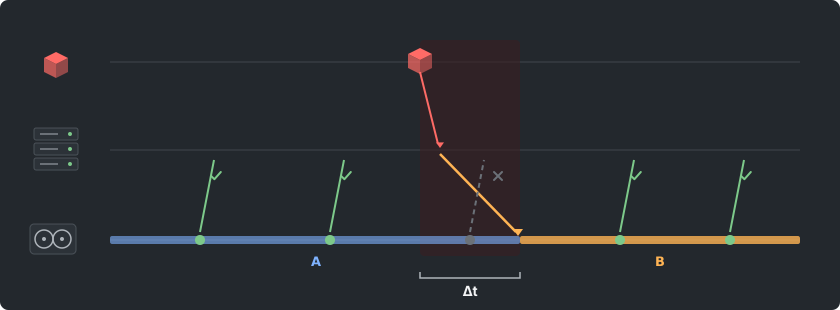
A stale share is a result your rig submits for work that has already been replaced by a newer job. It was valid effort, but it arrived after the job changed, so it cannot count toward a block.
Here is how it happens. When the network finds a new block, the pool sends every miner a fresh job straight away. Until your rig receives that job and switches to it, it keeps hashing the old one. Any share it finds in that gap, or that is still travelling to the pool, is stale.
Stale is not the same as invalid. A stale share was a correct answer to an old question. An invalid share was a wrong answer, usually caused by an unstable overclock or a broken miner. They have different fixes, so check which one your miner reports.
Latency and an unstable rig cause stale shares. A few are normal; a rising rate pulls your effective hashrate down and is a sign to check your region and connection. Distance to the server, a busy home network, Wi-Fi and a slow rig that takes long to switch jobs all add to the gap.
Coins with short block times see more stale shares, because jobs change more often. On a coin with a new block every few seconds, a delay that would be harmless on a ten-minute coin becomes noticeable.
A common mistake is to ignore a high stale rate because the miner's hashrate looks fine. The miner counts every hash, but the pool only credits shares that count, so stale shares are lost earnings.
To reduce them, connect to the server region closest to you, use a wired connection, and keep your miner up to date. Then compare the stale count in your miner and on the pool's miner page after a few hours. If it stays high on one rig only, the problem is on that rig.